Clean, Honest Ingredients
Quality You Can Trust
Responsive Customer Support
Fast & Reliable Delivery
Regulated Sourcing
Clean, Honest Ingredients
Quality You Can Trust
Responsive Customer Support
Fast & Reliable Delivery
Regulated Sourcing
Clean, Honest Ingredients
Quality You Can Trust
Responsive Customer Support
Fast & Reliable Delivery
Regulated Sourcing
Clean, Honest Ingredients
Quality You Can Trust
Responsive Customer Support
Fast & Reliable Delivery
Regulated Sourcing



Choosing the right cooking oil is not only about taste. The way an oil is extracted also affects its flavour, aroma, colour and overall character. This is why many Indian households are returning to traditional oils such as wood-pressed groundnut, sesame and coconut oil, while also exploring cold-pressed options such as sunflower and almond oil. But with so many names on the label, it can be difficult to know which oil suits your needs. What does cold-pressed actually mean? How is wood-pressed oil different from refined oil? Which oil is better for cooking, hair care or skin care?
The extraction method plays an important role in the character of an oil. Cold-pressed oils are extracted from seeds or nuts using mechanical pressure, with little or no external heat added during the process. Wood-pressed oils are traditionally extracted using a wooden chekku or ghani. Both methods aim to extract oil without the intensive refining steps commonly used for refined oils. As a result, cold-pressed and wood-pressed oils tend to retain more of the natural aroma, colour and flavour of their source ingredients.
The chekku or ghani is a traditional oil extraction method that has been used in India for generations. Seeds, nuts or other oil-rich ingredients are placed inside the wooden pressing unit and slowly crushed under mechanical pressure. The slower extraction process helps limit excessive heat generated through friction. The oil is then filtered to remove larger particles before being packed for use. Because the process is less intensive than industrial refining, traditional oils often have a more noticeable aroma and natural taste.
Cold-pressed and wood-pressed oils are both mechanically extracted, but the equipment and traditional method can differ. Wood pressing specifically refers to extraction through a wooden chekku or ghani, while cold pressing is a broader term for mechanical extraction carried out without deliberately applying high heat.
Refined oils go through additional processing steps to improve colour, odour, flavour and shelf stability. These processes can include refining, bleaching and deodorisation. The result is usually a lighter-tasting oil with a more neutral appearance.
Neither type needs to be treated as a one-size-fits-all choice. The best oil depends on how you plan to use it, your cooking style and your personal preferences.
Different oils have different flavours, textures and traditional uses. Understanding these differences makes it easier to choose the right option for your kitchen and personal care routine.
Wood-pressed groundnut oil is a popular choice in Indian kitchens because of its pleasant nutty aroma and balanced flavour. It works well with everyday cooking and can be used for dishes where you want the natural taste of groundnuts to complement the food.
It is commonly used for sautéing, shallow frying, tempering and other regular cooking applications. Its familiar flavour makes it particularly suitable for traditional Indian recipes.
Wood-pressed sesame oil, also known as gingelly oil or Nalla Ennai, has a distinctive aroma and rich, slightly nutty taste. It has a long-standing place in South Indian cooking and is often used in pickles, chutneys, podis and traditional recipes.
A small amount can add plenty of flavour, making it useful for tempering and finishing dishes. It is also traditionally associated with hair and body care routines.
Wood-pressed coconut oil is made by mechanically pressing coconut to obtain its natural oil. It has the characteristic aroma and flavour associated with coconut and is widely used in Indian kitchens.
It can be used in cooking, baking and traditional recipes where coconut flavour works well. It is also a popular choice for traditional hair care and body care routines.
Virgin coconut oil is different from ordinary wood-pressed coconut oil mainly because of how it is produced and the type of coconut material used. It is generally made using methods designed to retain the fresh coconut character, resulting in a mild-to-distinct coconut aroma and flavour.
Virgin coconut oil is often used in food, personal care and beauty routines. Many people also prefer it when they want an oil with a more pronounced natural coconut character.
Cold-pressed sunflower oil offers a lighter flavour compared with some traditional oils. This makes it suitable for people who prefer an oil that does not strongly alter the taste of their food.
It can be used for everyday cooking, sautéing and salad preparations, depending on your cooking method and dietary preferences. Its relatively mild flavour also makes it easy to use across different cuisines.
Cold-pressed almond oil has a delicate nutty character and is commonly associated with personal care as well as culinary use. When choosing almond oil for food, always check that the product is specifically labelled as edible or suitable for culinary use.
For personal care, almond oil is often used as part of massage and skin or hair care routines. Its smooth texture makes it convenient for applications where a lightweight-feeling oil is preferred.
Cold-pressed castor oil is a thick oil traditionally used for personal care. It is particularly well known in Indian households as part of traditional hair and scalp care routines.
Castor oil is considerably thicker than many other plant oils, so some people mix it with lighter oils before applying it to hair or skin. For internal use, only use products specifically labelled and approved for that purpose and follow appropriate professional guidance.
Cold-pressed virgin olive oil is valued for its distinctive flavour and is widely used in salads, dressings, dips and selected cooking applications. Its fruity or peppery character can add depth to simple dishes.
It is especially useful when you want the flavour of olive oil to remain noticeable. Choosing the right grade and using it according to the product's recommended application will help you get the best results.
There is no single oil that is perfect for every purpose. Your choice should depend on the food you are preparing, the cooking temperature and whether you are buying oil for culinary or personal care use.
For everyday Indian cooking, wood-pressed groundnut oil, sesame oil and coconut oil can be useful options depending on the recipe and preferred flavour. Groundnut oil works well for many regular cooking methods, while sesame oil adds a strong traditional flavour to tempering and South Indian dishes.
Coconut oil is a natural match for recipes where its aroma complements the ingredients. For frying, always check the product's recommended cooking applications and avoid repeatedly heating and reusing oil.
Coconut oil, virgin coconut oil, sesame oil, almond oil and castor oil are commonly used in traditional hair and skin care routines. Their textures vary considerably, so your choice depends on how you want the oil to feel and how you plan to use it.
For example, coconut and sesame oils are popular for traditional oiling routines, while almond oil has a lighter feel. Castor oil is much thicker and is often blended with another oil for easier application.
Both can be useful, but they may suit different preferences. If you want the characteristic flavour and aroma of traditionally pressed coconut oil for cooking, wood-pressed coconut oil can be a suitable choice.
If you prefer an oil with a fresh coconut character for food or personal care, virgin coconut oil may be more appealing. Always check the label to understand the extraction method, intended use and ingredients before buying.
Choosing a good oil involves more than looking for words such as "natural" or "cold-pressed" on the label. Check the ingredient list and make sure the oil clearly identifies its source and intended use.
Look for proper packaging, manufacturing and best-before information, batch details and appropriate food or regulatory information. Buying from a reliable seller also gives you greater confidence about product handling and traceability.
Unusual odour, unexpected colour changes, excessive sediment or a taste that does not match the natural character of the oil may be reasons to check the product more carefully. However, natural oils can vary slightly in colour and aroma from batch to batch, so these signs alone do not prove adulteration.
Avoid relying on viral home tests as a definite way to identify purity. For greater confidence, check the label, packaging details and relevant quality information, and choose products from a trustworthy source.
Wood-pressed oil can cost more because traditional extraction is generally slower and may involve smaller-scale processing. The process also tends to focus on mechanical extraction rather than the extensive refining used to produce highly processed oils.
The price can also reflect the quality and quantity of raw materials, filtration, packaging, storage and handling. While price is an important consideration, it should not be the only factor when choosing an oil.
Extraction method, ingredients, freshness, packaging and intended use are equally important.
Proper storage can help maintain the quality and flavour of your oil. Keep bottles tightly closed and store them in a cool, dry place away from direct sunlight and strong sources of heat.
Avoid leaving the bottle open for long periods, especially near the cooking stove. Use clean, dry utensils when handling oil and follow the storage instructions on the product label.
Buying an appropriate quantity for regular use can also be helpful. Once opened, try to use the oil within the recommended period rather than keeping the same bottle for too long.
Not exactly. Both are mechanical extraction methods, but wood-pressed oil specifically refers to traditional pressing using a wooden chekku or ghani. Cold-pressed is a broader term used for oils extracted mechanically without deliberately applying high heat.
There is no single best oil for every household. Wood-pressed groundnut, sesame and coconut oils can all be useful depending on the recipe, cooking method and flavour you prefer.
Some cold-pressed oils can be used for cooking, but suitability depends on the specific oil and the cooking temperature. Always follow the manufacturer's recommended usage and avoid repeatedly heating the same oil.
No. The terms describe different aspects of the oil and its production. Virgin coconut oil is generally made to retain the fresh coconut character, while wood-pressed coconut oil refers specifically to the traditional wooden pressing method.
Store them in a tightly sealed container in a cool, dry and dark place. Keeping oils away from direct sunlight and excessive heat can help preserve their flavour and quality.
Choosing an oil becomes much easier when you understand what is inside the bottle and how it was extracted. From wood-pressed groundnut and sesame oils to coconut, sunflower, almond, castor and virgin olive oils, each option has its own characteristics and uses.
At RK FarmStore, you can explore different cold-pressed and wood-pressed oil options and choose according to your cooking, hair care and personal preferences.
"RK Oils are very good quality. I wanted a good source to buy good quality wood pressed oil. Very happy I found this store."

"I started using these soaps in December after a friend recommended them. Love it. Doesn’t leave your skin feeling dry and the fragrance is mild without overpowering. My family regularly uses these soaps now. We each have our favourites. Mine is the charcoal soap."

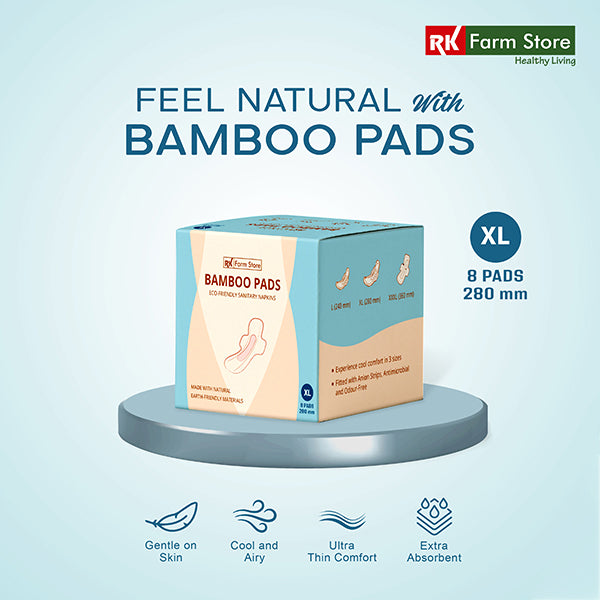
"Plastic in pads causes skin irritation so I was looking for a natural alternative. These bamboo pads are cool and comfortable."